
Contents
Turkmenistan RegionTurkmenistan Region & ZoroastrianismNisa, Anau, Kopet Dag FoothillsMouru - Gonur 1Mouru - Gonur 2Mouru - Gonur 3Mouru - Merv |
Mouru - MervTurkmenistan Region Page 4Turkmenistan Region Pages:» Page 1: Turkmenistan Region Introduction» Page 2: Nisaya - Anau & Ancient Kopet Dag Foothill Townships» Page 3: Mouru - Gonur
Location
As with Gonur, Merv lies in the Murgab river delta, the area generally considered to be the ancient land of Mouru, the third Vendidad nation.
Merv lies on one of the main arms of the ancient Silk Roads that carried trade between Europe and Africa and the Far East. Historically, Merv was also an important departure point for the 180 km journey across desert northwest to ancient Amul (today Turkmenabad) located on the banks of the Amu Darya river. The ruins of ancient Merv are located near the small town of Bairam Ali, a Russian garrison town established in the early twentieth century.
Endangered SiteIn 1987 the Government of Turkmenistan established an archaeological park to protect the sites of the old walled cities, some extra-mural areas, and outlying buildings, thereby protecting the site from agricultural encroachment and improving access to the monuments. In 1999, the United Nations declared Merv a World Heritage Site. Despite these actions, in 2000 the World Monuments Watch placed Merv on its list of the world's 100 most endangered sites. History & Cities of Merv
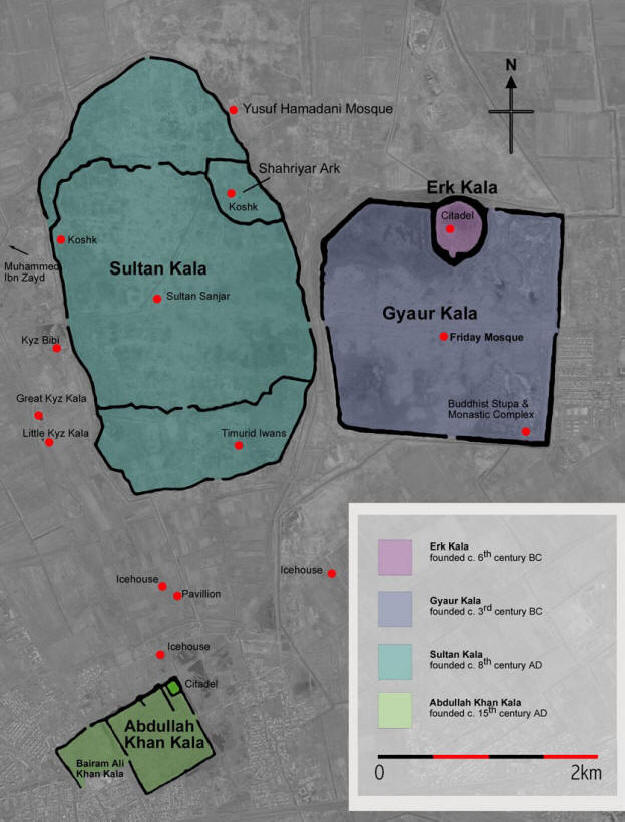
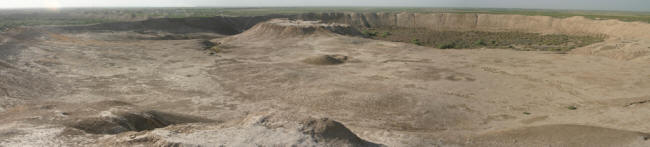
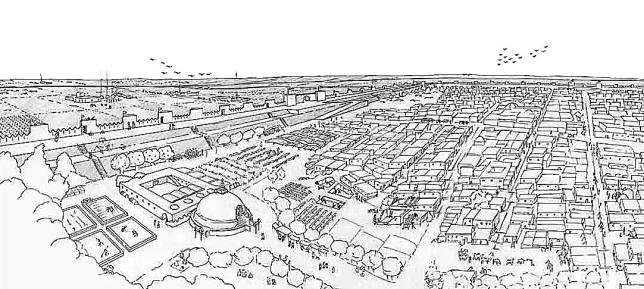
The ruins of Merv contain a succession of ancient cities developed over a period of 2500 years at the heart of the oasis formed by Murgab river delta, and close to the course of where the main river channel flowed in ancient times. Together, the cities of Merv once encompassed over 1200 hectares.
Erk Kala
The oldest of Merv's ruins, Erk Kala (a modern name meaning citadel castle), date from the 5th century BCE. Constructed by the Persian Achaemenians, Erk Kala appears to have been the central city of Margush as it was known to the Achaemenians serving as an important administrative and trading centre. It lay at the hub of the spectacular Silk Roads along which trade between the furthest reaches of the Persian empire flourished.
Gyaur Kala
With the defeat of the Achaemenians by Alexander in the 4th century BCE, Merv came under Macedonian rule. After Alexander's death, the lands he had conquered became the Seleucid Empire ruled, one of his generals Seleucus I (312-280 BCE). Selecus' successor, Antiochus I (280-261 BCE), began a massive expansion of the city at Merv, constructing a walled city nearly two kilometres across called Antiochia Margiana (today called Gyaur Kala) and covering some 340 hectares. He converted the earlier city of Erk Kala into a citadel that lay within the new walled city. Gyaur Kala was to remain occupied for a thousand years.
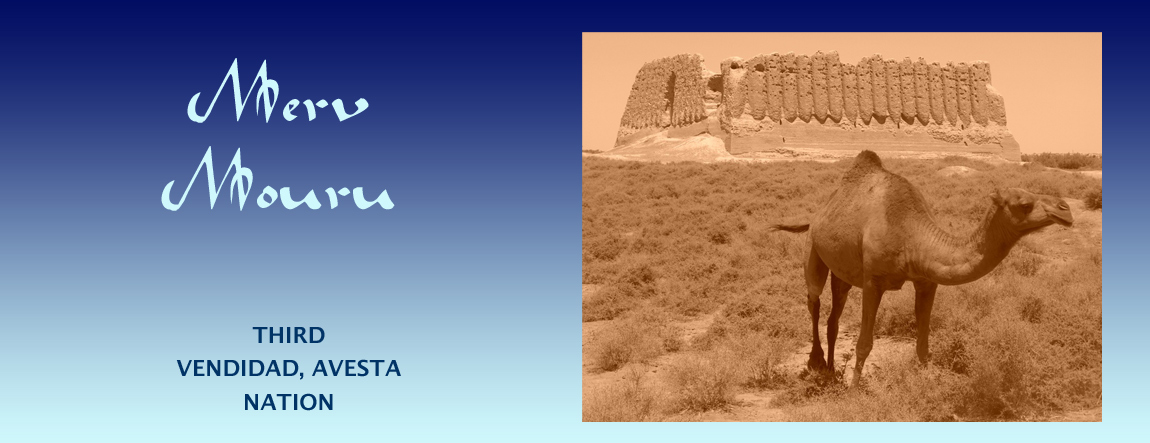
The Persian Sassanians were defeated by the Arabs in 649 CE. During the rule of the second Arab caliphate, the Umayyads (660 - 750 CE), Merv became the capital of Khorasan (the 'eastern land') and a centre of further Arab expansion. By the seventh century CE, koshks such as the Kiz Kala or Kyz Kala (see photograph on the page banner at the top of this page), stand alone buildings defended by striking, massive, corrugated walls had been constructed west the city walls.
Sultan Kala
By the beginning of the eighth century CE, suburbs had risen near the Majan canal which flowed a kilometre west of Gyaur Kala city wall. When Abbasid Abu Muslim established dynastic power in February 748 CE, he relocated the government buildings and major bazaars from the ancient city to a location near the suburb. Merv prospered at this site under the Abbasids and Tahirids, but went through a period of decline when political power moved to Nishapur and Bukhara.
Abdullah Khan Kala
In the 15th century CE, in preparation for establishing Merv as his capital, Timurid king Shahrukh (1405-47 CE) founded a new planned settlement, now known as the Abdullah Khan Kala, a kilometre south of Sultan Kala. The new town covered some 46 hectares. Shahrukh instituted a major building program, rebuilt the irrigation system, and is credited with construction of the dam at Merv. Construction came to a halt when Shahrukh decided to establish his capital in Samarkand instead. Resumption of development of Merv had to wait until Shaybanis' reign (1500-98 CE) who built the fortification walls.
Bairam Ali Khan Kala
A rectangular extension known as Bairam Ali Khan Kala was constructed to the west of Abdullah Khan Kala in the eighteenth century. These two sites were probably in use until the early nineteenth century. By the time the Russians arrived in 1885 CE, the site had been abandoned and many of its buildings had been dismantled to provide bricks for new construction.
» Page 1 - Turkmenistan Region Introduction |
» Site Contents |



• © Author: K. E. Eduljee, Zoroastrian Heritage, 2005-23 (researched from 1979 onwards) • Contact • Page validated by W3C.org